AI Observatory

The NeoMundi AI Observatory is our public research program dedicated to the continuous, transparent and reproducible evaluation of generative AI systems.

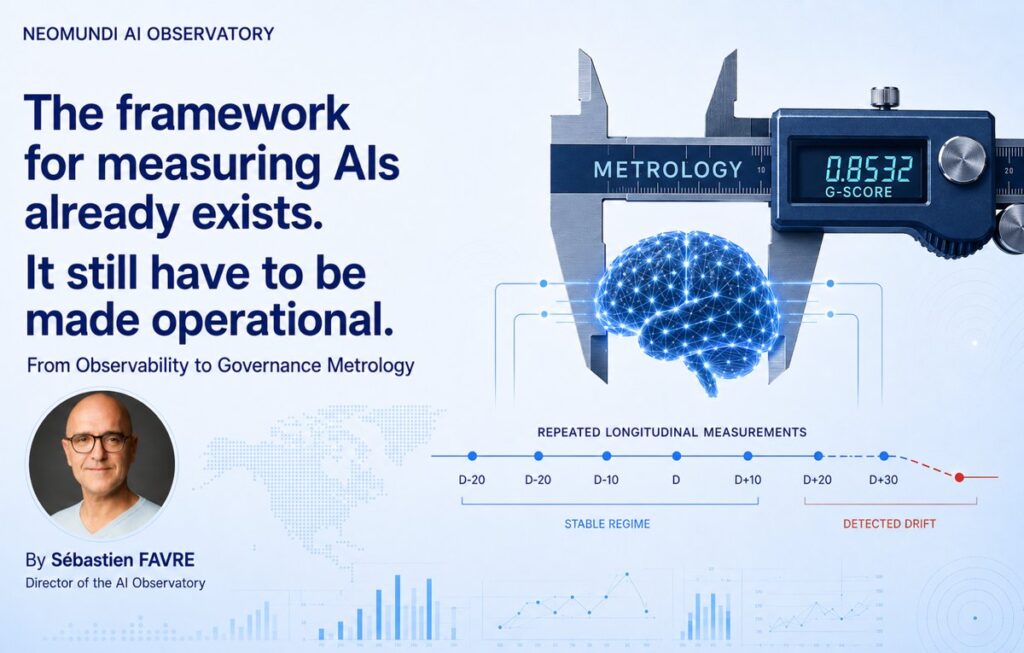
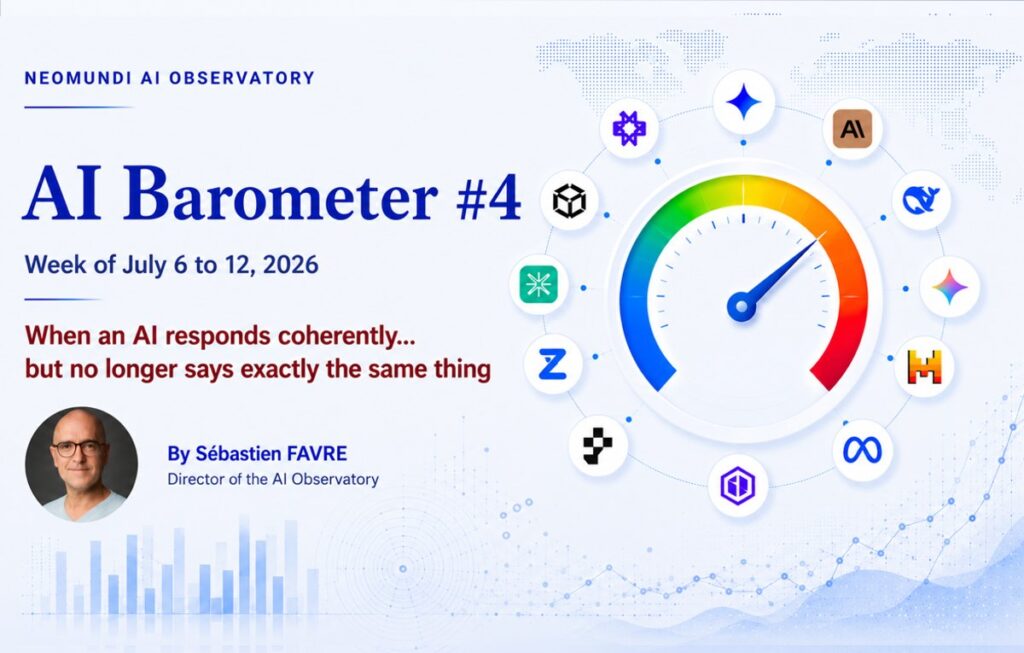
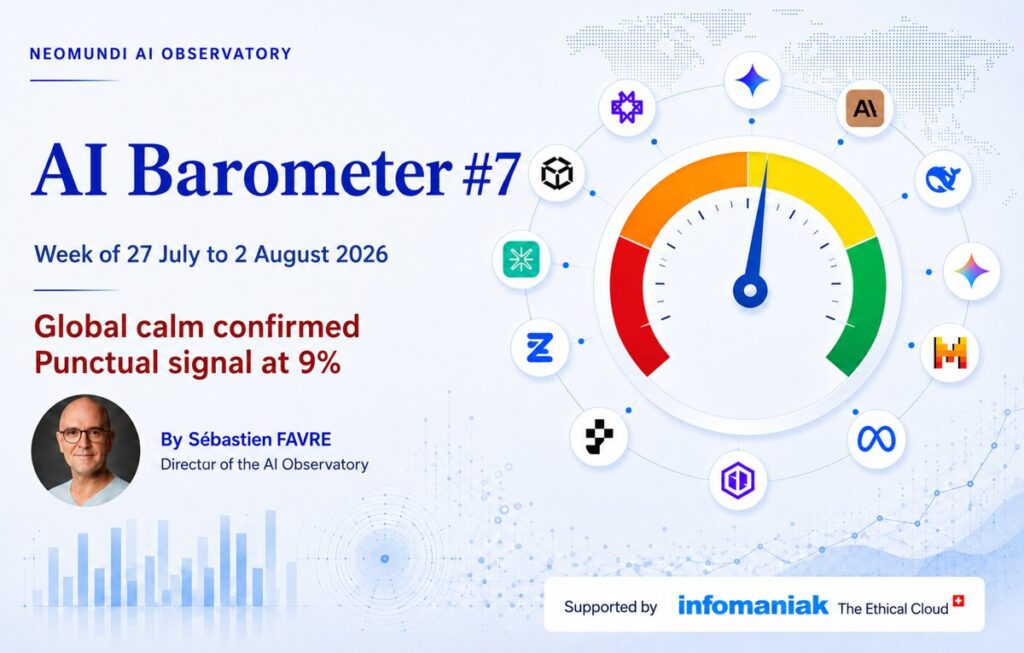
We regularly publish thermodynamic cartographies and in-depth observations, including the NeoMundi AI Barometer, which tracks de-identified model profiles over time across multiple dimensions: stability, factual validity, informational density, factual-risk signals, semantic variation and cost efficiency. These publications reveal behavioral trends and silent regime changes that traditional one-shot benchmarks cannot capture.

All our work is built on open methodologies and publicly available data. Generation scripts, scoring protocols and raw datasets are released on GitHub, allowing researchers, developers and the wider AI community to audit, reproduce and build upon our observations.

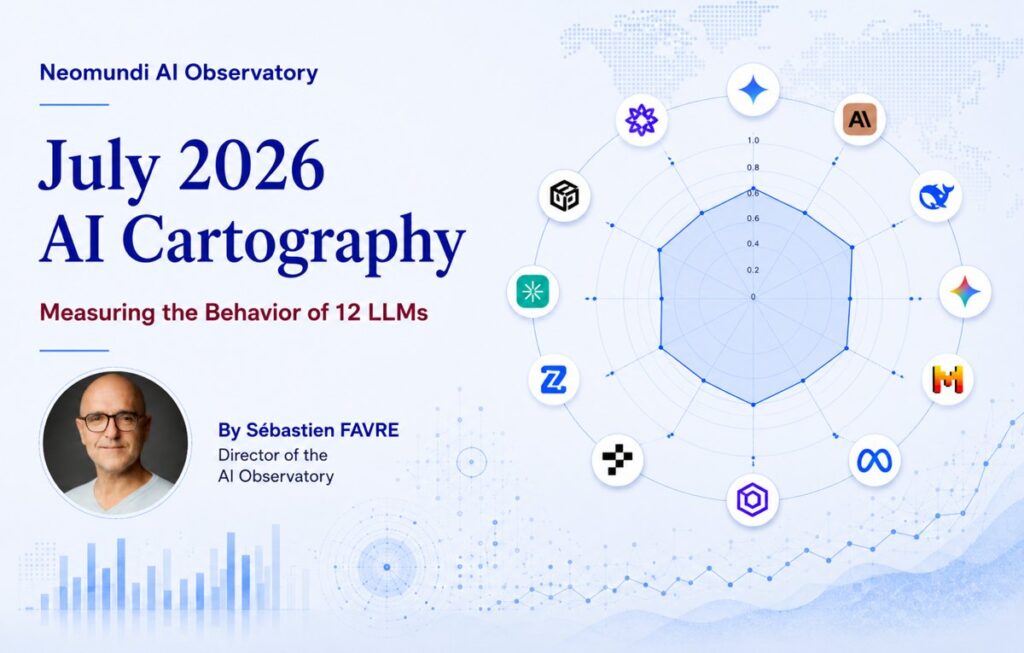
June 2026 cartography, 12 major LLMs measured
AI Observatory

June 2026 cartography: measuring the behavior of 12 major LLMs

1. For AI systems, price, stability and factual accuracy do not always move together We measured 12 major generative AI systems using the same protocol, in order to compare their observable stability, factual validity and relative cost per request. Each point represents an observed profile. Horizontal axis: observable stability · Vertical axis: evaluated factual validity

AI Stability Measure - Comparative Cohort Methodology, May 2026
AI Observatory

Public methodological review of NeoMundi’s May 2026 Comparative Cohort

NeoMundi Recherche publishes a public, sanitized version of an independent methodological review of its real-time approach to measuring the stability of generative AI. The review is based on a May 2026 comparative cohort of eight anonymized providers. It examines what a real-time signal can and cannot capture, documents the current limits of the method, and

Distributed autonomous systems can now coordinate trajectories, distribute tasks, and maintain dynamic formations at scale.
AI Observatory

Murmuration

1. MURMURATION – Research on Collective Runtime Stability Distributed autonomous systems can now coordinate trajectories, distribute tasks, and maintain dynamic formations at scale. But one critical question remains largely unsolved: how can we measure the collective stability of a multi-agent system before a systemic failure in cohesion emerges? Current distributed architectures are designed to optimize:

Scroll to Top